
How to Search the Fillmore Court Docket
Fillmore posts no municipal-court webpage and offers no online docket of its own. Your first stop is Missouri Case.net. Type in the citation number or the official case number. The result should show the court, the Andrew County location, and the case category. It also gives the filed date and the current status. Case.net also lists case headers, dated docket entries, and scheduled hearings. Public document links appear where allowed. Remember that a city name on a notice does not settle who holds the court record.
- Retain the Fillmore paper notice and copy its court name, case number, and date exactly.
- Use Case Number Search before trying a broader Fillmore name search.
- Open the matching case and compare the court and case category with the citation.
- Read the current docket entries and Scheduled Hearings & Trials details.
- Ask the Andrew Circuit Clerk to identify the court record route if the Fillmore result is absent or unclear.
Case.net offers several search families: Litigant Name, Filing Date, Case Number, and Scheduled Hearings & Trials. The case number is usually the safest key for a Fillmore lookup. A name match is only an index hit, so confirm it against the court and the date before trusting it.
Fillmore Case.net Search Fields
A Fillmore case header can carry the case number and style. It may also show court or location, case type, filing date, division or judge, and status. Below that sits the docket layer, a chronological list of filed events and court actions. Scheduled Hearings & Trials adds the event date and time. It also lists location or division and event type when populated. Keep these layers separate when you read a Fillmore court record. The header alone tells you nothing about a hearing setting. And a header is never the same thing as an attached court document.
| Fillmore search field | Use | Check before relying on it |
|---|---|---|
| Case number | Best route for a citation or court notice. | Match the court and county. |
| Case category | Shows the record type, such as municipal, traffic, or infraction. | Read the actual displayed category. |
| Scheduled hearing | Finds an event date or time. | Confirm a live Fillmore setting with the clerk. |
| Docket entry link | May open a public attachment. | A missing link can mean no attachment or no public access. |
Missouri file-viewer materials describe the difference plainly. A linked docket entry may have a public document attached. An unlinked entry may not. So a Fillmore document that will not open proves nothing about the case. The court did not lose it, and the case still existed.
The Fillmore Municipal Court
Fillmore has no separate municipal-court page and no named judge. It posts no court date, no court building listing, and no online municipal docket. The heading here describes a possible city-court topic, not a confirmed institution. The citation controls everything. It may point to a municipal route, an Andrew County court, or another official court. It may instead give written payment and appearance instructions you must follow as written.
Fillmore does appear in Andrew County’s municipality table. That listing helps with local contact details. But it is not a court roster and not a statement of judicial custody. The city clerk cannot pull a full court docket or move a hearing. The clerk also cannot certify a court document. The court named in the filed case is the record source.
Fillmore City Clerk and Circuit Clerk
Andrew County’s municipality list names Terry (Bob) Lance as Fillmore clerk and gives 816-487-2201. The city clerk is the right call for a local office or an ordinance question. The clerk can also lead you to where a citation should go. The Andrew County Circuit Clerk is the judicial custodian. It is also the routing office for Andrew court records. The titles sound alike, but the work is different.
When you call about a Fillmore docket, state what you know. Give the citation or case number, the court printed on the notice, the date, and the case type. Ask the city clerk which office issued a city document. Then ask the Circuit Clerk whether the named docket sits in Andrew County. Ask, too, whether the public can search or view it. Two calls close the gap without guessing at a portal.
Fillmore city contact
Clerk Terry (Bob) Lance for Fillmore local routing or municipal-code questions.
816-487-2201
Andrew judicial record contact
Andrew County Circuit Clerk for court docket, courthouse access, and case-record questions.
816-324-3921
Fillmore Court Dates and Settings
Fillmore has no posted recurring court schedule. The first-Tuesday calendar documented for Savannah and Country Club does not carry over to Fillmore. A real Fillmore court date comes only from the citation, a court notice, or a Case.net scheduled-hearing entry. Clerk confirmation also counts. Even then, a continuance, cancellation, reset, or new event can change the setting.
| Date | The current case event date shown by the Fillmore citation or official court record. |
|---|---|
| Time | The scheduled hearing time or docket-call time for that event. |
| Court | The judicial court or division printed on the Fillmore notice and case header. |
| Judge | The judicial officer shown for the individual case, if publicly displayed. |
| Setting Type | The event label, such as hearing, arraignment, trial, compliance, or continuance. |
Write down the date you searched and the exact event label. If a paper notice disagrees with the electronic result, call the court clerk before you appear. Current confirmation from the clerk beats any assumed municipal pattern.
Fillmore Citation Routing Steps
A Fillmore citation should move through a simple court-identification process: citation › court name › Case.net result › clerk confirmation › appropriate court action. The city location and the court location can differ in a unified court system. Use the court field, not just the word Fillmore, to choose the docket route.
Missouri court records use category codes. Examples include MU for municipal, TR for traffic, and IN for infraction. A code or number pattern never replaces the record itself. Copy the official case number. Check the court header before citing an event, charge, or disposition.
Fillmore routing rule: The city clerk can help identify a city route. The court named on the citation and the Andrew Circuit Clerk identify the judicial docket route.
Fillmore Traffic Tickets
The uniform citation or case number is the best search field for a Fillmore traffic ticket. An official record can show the court or city, the charge description or code, the filed date, the setting, plea, notice, continuance, disposition, judgment, fine, and costs. A public link may appear where allowed. Every field is case-specific. A Fillmore ticket may run through a municipal court, the county circuit, a violation bureau, or the Fine Collection Center. It depends on the court and instructions printed on the ticket.
Fillmore offers no online payment or deferment portal. So never assume a ticket can be paid without appearing. Read the ticket, search Case.net, and confirm the current route with the clerk. The wider county picture is in Andrew County traffic court records.
Fillmore No-Portal Verification
Fillmore posts no separate court portal. That is a fact about access. It is not a hint that the city keeps no records or that a citation has no docket. Treat every search gap carefully, and confirm the court title first. Run the case number through Case.net. After that, call the Andrew Circuit Clerk. The Fillmore clerk can also help. It can tell you whether a matter belongs to a city office or a municipal-code question.
Case.net has lawful gaps of its own. An entry may be pending, filed under a different court label, restricted, sealed, or expunged. It may simply sit outside your search terms. Guesswork about a case result, payment status, or court date never fills that gap.
Where Fillmore Cases End Up
Location alone will not settle a Fillmore docket. Missouri runs one unified circuit-court system. Circuit, associate, municipal, traffic, domestic, probate, and juvenile divisions all sit inside it. The initiating paper and case category pick the division. A Fillmore local issue may land in a court outside any separate city-office record structure, while a county-level case belongs with the proper Andrew division.
Docket flow: Fillmore municipal route if named › Andrew County Courts › Circuit Court of the State of Missouri
Say "municipal" with care here. No official listing names a standalone Fillmore court. So check the Case.net header before assuming anything. If it identifies an Andrew County court, go to the Circuit Clerk for record access, and use the Andrew County court docket overview for the wider court structure.
Fillmore Municipal Matter Boundaries
A Fillmore city code, a recorder record, and a judicial docket are three separate things. Each is its own public-record category. The city holds its own municipal-administration material. The county Recorder keeps land records, and the Circuit Clerk keeps the court records. Ask for the exact record you need. A blanket request for "all Fillmore records" lands in the wrong office. It can also pull confidential court material through the wrong channel.
Boundaries like these also protect accuracy. A code text describes a local rule, while a court docket records the actual filed case events. A city-office contact can point you locally. No single source gives the full history of a Fillmore court matter.
Public Access to Fillmore Court Records
Missouri court rules govern Fillmore court record access. Statutory confidentiality rules apply too. Redaction law matters, and a public Case.net header or docket entry does not put every document on your home screen. Some papers stay off the remote view. Court staff can tell you whether a public document is viewable remotely, at an Andrew courthouse terminal, or only through a records request.
Key Rules:
RSMo §610.011 states Missouri’s public-access policy, subject to lawful exceptions.
RSMo §509.520 requires specified private information to be protected in court filings.
Missouri Court Operating Rule 4 governs automated court records and confidential categories.
Some Fillmore records stay out of reach. Juvenile records, sealed or expunged cases, protected personal data, and materials restricted by rule, statute, or court order may all be unavailable. A public index listing changes none of that.
Fillmore Copy Request Channels
A Fillmore docket entry is often not enough. Name the case number and the exact document. The Fifth Circuit's shared Court Records Request Form lists non-certified, certified, and authenticated copy choices. Its header shows Buchanan County contact details. The form sits in shared circuit materials, though. Call the Andrew Circuit Clerk before mailing a Fillmore case anywhere.
Documents filed on or after July 1, 2023 may be viewable remotely. Missouri's expanded public-access rules allow this. Remote access is never automatic. Confidentiality and redaction limits still apply. The File Viewer Help route is document-specific. So ask the clerk about the copy type, cost, delivery method, and public status.
Keep a Fillmore request log. Put the citation, the case number, and the Fillmore court name at the top. Add the case category and filed date. Drop in the docket event, hearing date, document title, access result, and clerk confirmation. That one trail sorts a Fillmore city-routing question from a Fillmore court-record question. It also gives the Fillmore city clerk or the Andrew Circuit Clerk the exact detail needed to spot the right office.
Andrew County's Recorder office page lays out the county's land-record functions. Court dockets live with the clerk instead.
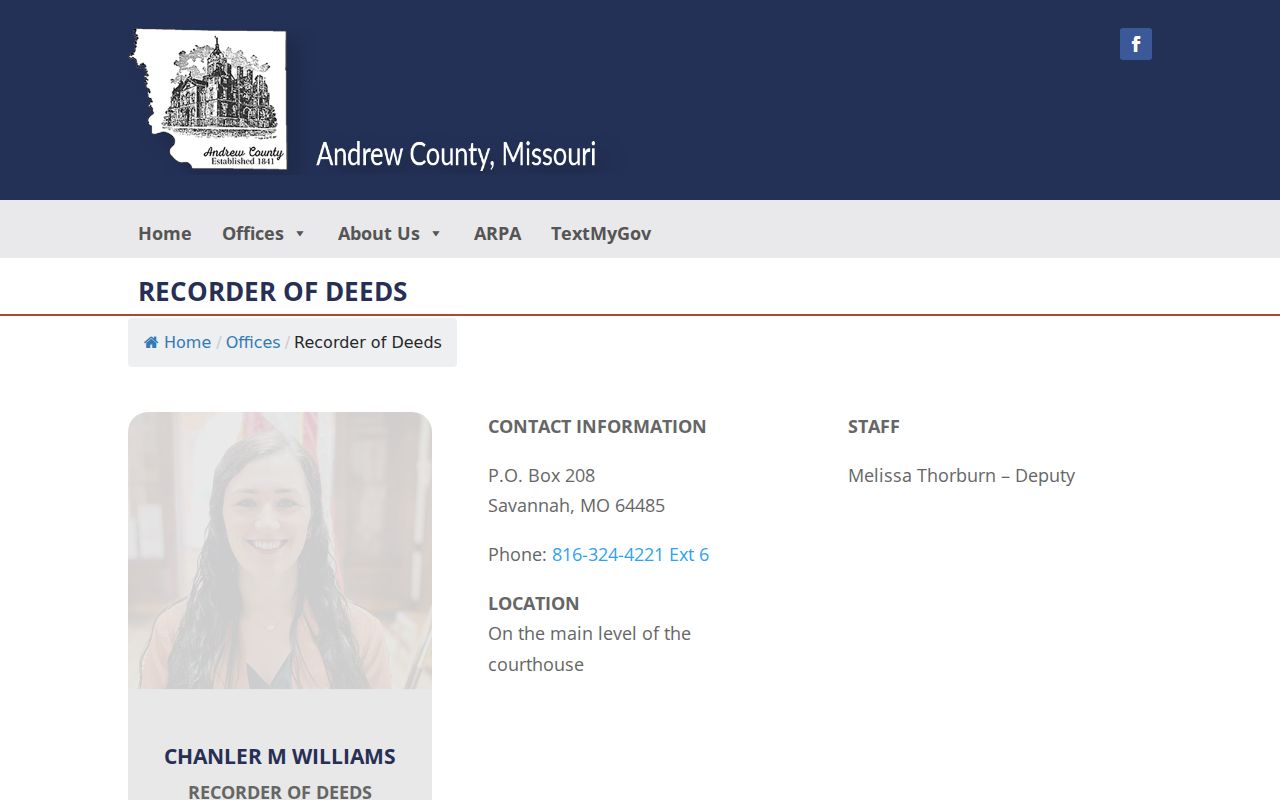
The Recorder page shows a separate county-record function. A Fillmore court docket belongs with the court and the Circuit Clerk, not a land-record office. One caution stands. No official source lists a Fillmore judge, schedule, municipal portal, or payment route.